Showing posts with label 200901 Spring IAR-221-01 History N Theory of Design I. Show all posts
Monday, May 11, 2009
Thursday, May 7, 2009
Final Draft-Chile House

Fritz Höger was born on June 12, 1877 in Bekenreihe, Schleswig-Holstein which is today Germany. Among his architectures, Chile house would be the outstanding architecture because of its huge size and its symbolic shape of Chile house. As I believe, there is a intent for any architecture and artifact. With this manner, Chile house was built to monumentalize international trade between Germany and Chile; therefore, it is named Chile house and its overall shape is ship. Moreover, it has features for an architecture such as arches, spire shaped part, divided space, circular shape part, and so on. There are arches for windows and over the entrances. It has very sharp corner at the end of roof corner to put symbolic meaning of ship. It cannot be seen from outside, but from the view of aerial view, there are three divided court yards inside of the Chile house. Also, there is half-circular shape of part where windows are in the court yards. As circular shape represent the harmony, it shows the harmony between Germany and Chile.
Chile House is a striking example of regional manifestation of Expressionism from 1921 to 1924. The Chile House is his masterpiece, a magnificent Expressionist office block anchored in the city centre like a giant, barnacle-encrusted liner. Chile House was built as a office building for a shipping company. It shows well about archetype, prototype, and hybrid as using not only marine architecture, but also the Gothic cathedrals constructed in brick, dark red clinker, that are widespread in the northern part of Germany. It also shows in the form of a giant ocean liner. Its sharply pointed like the bow of a ship at the southeast corner helps it to be known as the best-known building. Höger built three inner courtyards to supply enough light for all the rooms and the arching ribs within on the facades remind the Gothic style, too. After being completed, Chile House became a landmark of Hamburg.
Designed around two courtyards, the building forms a complete city block. Shops are incorporated into the Chile House at street level. Above, the offices follow the curve of a wave-like plan, that climaxes at the eastern tip or "prow". Offices step back from the street line above the sixth storey, and the windows gain arched tops.
Chile House is proof that the twentieth- century office block was able to develop in several directions and the Miesian model was far from being the only one, Höger's brilliance was to design a highly original and truly memorable city building that is urbane and well mannered from the perspective of those walking by. In Hamburg, pedestrians walk alongside Höger's rhythmic arcade.
Chile House is a striking example of regional manifestation of Expressionism from 1921 to 1924. The Chile House is his masterpiece, a magnificent Expressionist office block anchored in the city centre like a giant, barnacle-encrusted liner. Chile House was built as a office building for a shipping company. It shows well about archetype, prototype, and hybrid as using not only marine architecture, but also the Gothic cathedrals constructed in brick, dark red clinker, that are widespread in the northern part of Germany. It also shows in the form of a giant ocean liner. Its sharply pointed like the bow of a ship at the southeast corner helps it to be known as the best-known building. Höger built three inner courtyards to supply enough light for all the rooms and the arching ribs within on the facades remind the Gothic style, too. After being completed, Chile House became a landmark of Hamburg.
Designed around two courtyards, the building forms a complete city block. Shops are incorporated into the Chile House at street level. Above, the offices follow the curve of a wave-like plan, that climaxes at the eastern tip or "prow". Offices step back from the street line above the sixth storey, and the windows gain arched tops.
Chile House is proof that the twentieth- century office block was able to develop in several directions and the Miesian model was far from being the only one, Höger's brilliance was to design a highly original and truly memorable city building that is urbane and well mannered from the perspective of those walking by. In Hamburg, pedestrians walk alongside Höger's rhythmic arcade.
Wednesday, May 6, 2009
"Exploration," Unit Summary

The Edward and Frances Loewenstein House

http://images.google.com/imgres?imgurl=http://www.trianglemodernisthouses.com/loewen16.jpg&imgrefurl=http://www.trianglemodernisthouses.com/loewenstein.htm&usg=__IrvgukEALbsWqgFzXRgEmQX3yWU=&h=376&w=282&sz=29&hl=en&start=1&um=1&tbnid=xYKuMBmq0CSjPM:&tbnh=122&tbnw=92&prev=/images%3Fq%3Dloewenstein%2B1954%26hl%3Den%26um%3D1
Solomon R. Guggenheim Museum

http://www.fotocommunity.com/search?q=Guggenheim+museum&index=fotos&options=YToyOntzOjc6ImNoYW5uZWwiO3M6MToiMCI7czo1OiJzdGFydCI7czoxOiI4Ijt9&display=12321746
Chilehaus
Tuesday, April 21, 2009
Peer to Peer
Chile House
Chrysler Buildingboth images taken from Google.com
Chile House and Chrysler Building
It is easy to recognize that both building has triangular parts on building through these images. CB(Chrysler Building) is representing the automobile company and CH(Chile House) was built for shipping house. Moreover, these two buildings has two particular characters on itself such as bow for CH and circular shape and triangular shape are representing the wheel of vehicle. In common, it works as landmark of its location. Both has similar shape of windows.
Thursday, April 16, 2009
"Reflection," Unit Summary
This 'Reflection" unit is focusing on the use of the past architectural movements, styles, architectural techniques, and so on. Moreover, this unit is about reflecting on architectural design for Americans and to find out own architectural style of the United States of America what needs to be reflected. There are things to accomplish the goal "Reflection" such as appearance of new materials, techniques, and industrial revolution. During the period 18th and 19th century which is covered by "Reflection" unit, it is related to borrowing a particular part of architectural design instead of utilizing entirely.
The first topic of 'Reflection" unit is an architecture parlent which is about re-writing ideas by French design. In the 18th century, American was under British rule; therefore, British architectural style influenced American architectural style.
Along with the American Revolution, it changed the root of previous American architectural style. The revolution is about circulation; revival, rotation, cycle, reform, and renaissance. With these terms, revolution could be a turning point of 18th century architecture. Revolution made American could have their own architectural style. Among revolutions, the industrial revolution is the most influence thing to American architectural field. It came with the development of new materials such as glass and iron which made architecture to be built easier and more creative ways.
Along with new technology, handcraft versus machine craft became an another issue. The Arts and Crafts Movement is standing right in the middle of this issue which is about handcraft is the only beauty or machine craft beauty could be one. With this, how it can be done perfectly to express one's own charter arose.
In the 19th century, the more things has been changed due to the industrial revolution. Chicago and New York became a kind of Mecca of skyscrapers and it was started to build business offices. However, it was not only focused on offices, but also brought the development of residential architectural design. Frank Lloyd Wright could be outstanding architect designer. He had emphasis on the horizon and congruence between nature and human beings. Fallingwater is the best example to show Wright's own character and the industrial revolution. His own character made American to have American architectural style.
Along with "Technology," it brought new material, technique, and machine. Therefore, it is possible to reach the potential possibilities of architectural design easier and people can have more beautiful architecture. In the 21st century, there would be more development of technology which helps people who are working the field of architectural design.
The first topic of 'Reflection" unit is an architecture parlent which is about re-writing ideas by French design. In the 18th century, American was under British rule; therefore, British architectural style influenced American architectural style.
Along with the American Revolution, it changed the root of previous American architectural style. The revolution is about circulation; revival, rotation, cycle, reform, and renaissance. With these terms, revolution could be a turning point of 18th century architecture. Revolution made American could have their own architectural style. Among revolutions, the industrial revolution is the most influence thing to American architectural field. It came with the development of new materials such as glass and iron which made architecture to be built easier and more creative ways.
Along with new technology, handcraft versus machine craft became an another issue. The Arts and Crafts Movement is standing right in the middle of this issue which is about handcraft is the only beauty or machine craft beauty could be one. With this, how it can be done perfectly to express one's own charter arose.
In the 19th century, the more things has been changed due to the industrial revolution. Chicago and New York became a kind of Mecca of skyscrapers and it was started to build business offices. However, it was not only focused on offices, but also brought the development of residential architectural design. Frank Lloyd Wright could be outstanding architect designer. He had emphasis on the horizon and congruence between nature and human beings. Fallingwater is the best example to show Wright's own character and the industrial revolution. His own character made American to have American architectural style.
Along with "Technology," it brought new material, technique, and machine. Therefore, it is possible to reach the potential possibilities of architectural design easier and people can have more beautiful architecture. In the 21st century, there would be more development of technology which helps people who are working the field of architectural design.
Wednesday, April 8, 2009
Writing
Fritz Höger's Chile House
In the 21st century, nobody lives in the old-fashioned residences such as caves and under the sort of tents which are covered with animal leather any more. Moreover, human beings do not satisfy with their current lives. As we can see through the history, people have been developing, discovering, and creating new things to be satisfied with their lives; for instance, upgraded cars are developing, residential environments are changing, and people’s thoughts for better one are endless. Instinctively, human beings are looking for something better than current one; for example, when people are tired, they want to take some rests and when people feel hungry, they need some food to eat. Among these various instincts, there is an instinct for residential environment. In other words, residential environment is an architectural structure; in addition, architecture is not just a structure because it involves religion, culture, and history.
Fritz H ger was born on June 12, 1877 in Bekenreihe, Schleswig-Holstein which is today Germany. His occupation was not being an architect at the first time. He served an apprenticeship as carpenter and bricklayer for a year. And then, he studied for two years at the school building crafts in Hamburg, Germany. After his study at school, he became a draftsman in the Hamburg architectural practice of Lundt and Kallmorgen. In 1907, he established his own company which was an announcement to the world that indicates the beginning of his own career. He made his name in Hamburg with the design of a number of small houses in an Arts and Crafts style rooted in the work of Herman Muthesius who imported many of his designs from England. From 1911 to 1913, he practiced Rappolt Building and the Klöpper Building in Hamburg. Also, to protect traditional regional culture, he became a supporter of the Home Protection Movement. From 1921 to 1941, he did lots of work to create architectural structure in Germany until five years before he dies. On June 21, 1949, he died in Bad Segeberg, Germany.
Chile House is a striking example of regional manifestation of Expressionism from 1921 to 1924. The Chile House is his masterpiece, a magnificent Expressionist office block anchored in the city centre like a giant, barnacle-encrusted liner. Chile House was built as a office building for a shipping company. It shows well about archetype, prototype, and hybrid as using not only marine architecture, but also the Gothic cathedrals constructed in brick, dark red clinker, that are widespread in the northern part of Germany. It also shows in the form of a giant ocean liner. Its sharply pointed like the bow of a ship at the southeast corner helps it to be known as the best-known building. H ger built three inner courtyards to supply enough light for all the rooms and the arching ribs within on the facades remind the Gothic style, too. After being completed, Chile House became a landmark of Hamburg.
Designed around two courtyards, the building forms a complete city block. Shops are incorporated into the Chile House at street level. Above, the offices follow the curve of a wave-like plan, that climaxes at the eastern tip or "prow". Offices step back from the street line above the sixth storey, and the windows gain arched tops.
Chile House is proof that the twentieth- century office block was able to develop in several directions and the Miesian model was far from being the only one, Höger's brilliance was to design a highly original and truly memorable city building that is urbane and well mannered from the perspective of those walking by. In Hamburg, pedestrians walk alongside Höger's rhythmic arcade.
Tuesday, March 24, 2009
"Alternative," Unit Summary
Throughout 'Foundation" unit, the second unit is focusing on "Alternatives" which means choice able and replaceable. Therefore, this unit is extending to further theory based on the "Foundation" unit. Overall of the second unit "Alternatives" focuses on the change, transform, and revolution as a main flow of the second unit.
Alternative unit covers the Medieval period, Renaissance, and Baroque. It deals with Church VS Castle to indicate that Christianity became major religion in Italy which had strong influence on architecture. Also, it started to give more meaning to Church building itself as developing of particular part of building such as entrance and column. With these, technique and style of Church buildings became a kind of guideline of architectural designing.
Based on Gothic, each European countries such as France, Italy, England, and Germany started to have similar characters. In common, there were more religious meanings in Cathedrals based on architectural characters such as rose-stained glass window and so on. The importance of Romanesque, which means in the manner of Rome, architectural was emphasized. From the political aspects, the construction of Cathedral was used as measurement of improving social class or power.
The meaning of Renaissance can be defined as "Rebirth" which means revising of previous architectural styles. With the beginning of Renaissance, Cathedral was influenced by Renaissance. In addition, if previous architectures contained more religious and figurative meanings on architectures, architectures, which come after Renaissance, were started to have what Renaissance look like with borrowed techniques from ancient. For example, Palazzo de' Medici by Michelozzo di Bartolomeo shows "scale of city" on building not just building itself with divided meaning of floors such as "series of story" on the first, "entertaining" on the second floor, and space for "family" on the third floor and there are well-balanced use of "vertical and horizontal" in the building.
Baroque period contains feeling and emotion characters of architecture. The emphasis on facade was started to have drama on building along with division of religion. Division of religion influenced architectural design to take care of color, light and shade, ceiling, and ornament more than the past. Baroque period was a "re-writing" down the ancient architectural techniques.
This "Alternatives" unit introduced architectural structures which led revolution of development of history of architecture throughout the Medieval period, Renaissance, and Baroque. Fundamentally, even if it had different place, time, and culture, there was connection among different periods of architectures. Throughout the "Alternatives" unit, the principles of creating and development of architecture by time periods would be accepted.
Alternative unit covers the Medieval period, Renaissance, and Baroque. It deals with Church VS Castle to indicate that Christianity became major religion in Italy which had strong influence on architecture. Also, it started to give more meaning to Church building itself as developing of particular part of building such as entrance and column. With these, technique and style of Church buildings became a kind of guideline of architectural designing.
Based on Gothic, each European countries such as France, Italy, England, and Germany started to have similar characters. In common, there were more religious meanings in Cathedrals based on architectural characters such as rose-stained glass window and so on. The importance of Romanesque, which means in the manner of Rome, architectural was emphasized. From the political aspects, the construction of Cathedral was used as measurement of improving social class or power.
The meaning of Renaissance can be defined as "Rebirth" which means revising of previous architectural styles. With the beginning of Renaissance, Cathedral was influenced by Renaissance. In addition, if previous architectures contained more religious and figurative meanings on architectures, architectures, which come after Renaissance, were started to have what Renaissance look like with borrowed techniques from ancient. For example, Palazzo de' Medici by Michelozzo di Bartolomeo shows "scale of city" on building not just building itself with divided meaning of floors such as "series of story" on the first, "entertaining" on the second floor, and space for "family" on the third floor and there are well-balanced use of "vertical and horizontal" in the building.
Baroque period contains feeling and emotion characters of architecture. The emphasis on facade was started to have drama on building along with division of religion. Division of religion influenced architectural design to take care of color, light and shade, ceiling, and ornament more than the past. Baroque period was a "re-writing" down the ancient architectural techniques.
This "Alternatives" unit introduced architectural structures which led revolution of development of history of architecture throughout the Medieval period, Renaissance, and Baroque. Fundamentally, even if it had different place, time, and culture, there was connection among different periods of architectures. Throughout the "Alternatives" unit, the principles of creating and development of architecture by time periods would be accepted.
Thursday, March 19, 2009
deliverables articulation
VIEWS:
1. 2 point perspective drawing(2): pen(black & white)
2. Perspective drawing of inside(3): watercolor
3. 1 point perspective drawing(8): marker
4. perspective drawing of exterior(11): color pencil
5. Plan(12): pen
6. Drawing of corner(13): watercolor
7. aerial drawing(17): pen & pencil
8. exterior drawing(6): watercolor
9. perspective drawing(15): watercolor & marker
10. Street level drawing(1): watercolor
Outline
I. Introduction
A. Residential History
a. Change of human housingi. a kind of history of change
II. Body
A. History
a. Fritz Hoger
b. Chilehause
B. Features
a. material
b. style
III. Conclusion
a. How does this building influence, today?
b. Summary of essay
QUESTIONS AND ISSUES:
please, confirm ASAP so I can fix it if there are errors.
Will you mention about material for physical model? and scale?
What would be good scale and size for drawings?
1. 2 point perspective drawing(2): pen(black & white)
2. Perspective drawing of inside(3): watercolor
3. 1 point perspective drawing(8): marker
4. perspective drawing of exterior(11): color pencil
5. Plan(12): pen
6. Drawing of corner(13): watercolor
7. aerial drawing(17): pen & pencil
8. exterior drawing(6): watercolor
9. perspective drawing(15): watercolor & marker
10. Street level drawing(1): watercolor
Outline
I. Introduction
A. Residential History
a. Change of human housingi. a kind of history of change
II. Body
A. History
a. Fritz Hoger
b. Chilehause
B. Features
a. material
b. style
III. Conclusion
a. How does this building influence, today?
b. Summary of essay
QUESTIONS AND ISSUES:
please, confirm ASAP so I can fix it if there are errors.
Will you mention about material for physical model? and scale?
What would be good scale and size for drawings?
Sunday, March 1, 2009
Aqua vitae
Aqua vitae means "water of life" in Latin; in other words, this term is about how "water of life" worked for historically.
The main stream of historical architectural flow is Egypt - Greek - Roman. This flow is not only treated for Western Civilization, but also it works for historical architectural flow. In common, these three countries were nearby water.
First, Egypt is well-known as the Gift of the Nile because the major source, water connects each other and the river flows from the north into the Mediterranean Sea which means that this passage is through two different landscapes. Also, depends on the rainfall, "The river gave the ancient Egyptians their three seasons (Roth, 189)."
The main stream of historical architectural flow is Egypt - Greek - Roman. This flow is not only treated for Western Civilization, but also it works for historical architectural flow. In common, these three countries were nearby water.
First, Egypt is well-known as the Gift of the Nile because the major source, water connects each other and the river flows from the north into the Mediterranean Sea which means that this passage is through two different landscapes. Also, depends on the rainfall, "The river gave the ancient Egyptians their three seasons (Roth, 189)."

(Roth, 189)
Second, as climate and the river influenced in Egypt, they worked in Greece, too. The extended territories of Greece show that how did Greek used water as a material. In Greek, water served a important role such as extension of territory which represents ideal Greece is the center of the world.

(Roth, 216)
Third, there were some difference for Roman because they did not have exact benefit from water. Roman empire could be done by capturing and utilizing the Italian peninsula where the center of Mediterranean Sea. Because of the Italian peninsula Roman could extend their territory.

(Roth, 248)
"Foundation," Unit Summary
There are lot of principles to build architectures such as interior versus exterior, light, intend of architecture, and so on, but commodity, firmness, and delight would be the first things to be concerned by the architect to build well-done one.
According to the textbook, basic and the most important terms to see architecture whether it is well-done or not are Commodity, Firmness, and Delight. Sir Henry Wotten said that “In architecture as in all other operative arts, the end must direct the operation. The end is to build well. Well-bring hath three conditions: Commodities, Firmness, and Delight.” Commodity deals with the purpose and function of a structure such as what is the function of the space? and does the structure meet the functional needs? which is based on foundation. Firmness is about structure such as physical and perceptual structure. Delight deals with making structures appealing such as does the structure use the elements and principles of design to make a well-built one?.
Through the lecture of history with the textbook "Understanding Architecture It's Elements, History, and Meaning" written by Leland M. Roth, helps to have more architectural views based on the facts which are the historical events and so on. Definitely, as Patrick categorized, this was about "Foundation." This "Foundation" unit is about time : passage, male(wu-wu) : female(arch), real : ideal, archetype : prototype : hybrid, demos : empire, the wu -wu + other interpretations, architecture + civic life, local : international, structure + surface : east meets west. These categorized terms are how to make a balance between the concepts and the physical actions to build architecture. It was helpful to learn how to understand architecture and utmost importance for one to build, making foundation, the well-built base. Foundation unit can be dealt with three architectural aspects such as Egypt, Greek, and Roman. The representative architecture of Egypt is "Pyramid" which shows their cultural, religious, social aspects well in an architecture. Greek architecture has more structural principles than Egyptian and Roman such as orders, arch, and so on. Roman has a dome as a new structural principle. In common, they shows their superiority through architectural design which has stronger power than literal.
Also, there are three principles such as porch, court, and hearth which also can be recognized today. These were used for transition, gathering places, and special holy place. Acropolis is an example of combined three principles such as porch, court, and hearth. There is another example which shows multiple functions in an architecture. Colosseum shows that how did they enjoy their entertainments.
Throughout the historical architectures, it tells us the stories, functional aspects of architectures without literal one, and so on. Also, these historical things could be used for standard of future architectural designers and the past and future would be always with architecture as people still use orders. In other words, even if two countries are very far away regionally, there can be similar aspects in the field of architecture because every architectures were built by people and people are the main material to create architectures.
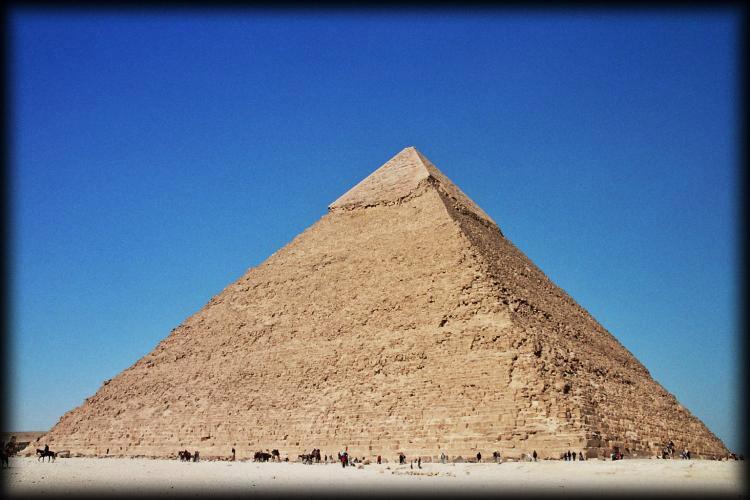
The root of all architectures.

http://www.ianandwendy.com/OtherTrips/Egypt/Cairo/Pyramids/Giza_Pyramids_Cairo_268__6A_1293.jpg
According to the textbook, basic and the most important terms to see architecture whether it is well-done or not are Commodity, Firmness, and Delight. Sir Henry Wotten said that “In architecture as in all other operative arts, the end must direct the operation. The end is to build well. Well-bring hath three conditions: Commodities, Firmness, and Delight.” Commodity deals with the purpose and function of a structure such as what is the function of the space? and does the structure meet the functional needs? which is based on foundation. Firmness is about structure such as physical and perceptual structure. Delight deals with making structures appealing such as does the structure use the elements and principles of design to make a well-built one?.
Through the lecture of history with the textbook "Understanding Architecture It's Elements, History, and Meaning" written by Leland M. Roth, helps to have more architectural views based on the facts which are the historical events and so on. Definitely, as Patrick categorized, this was about "Foundation." This "Foundation" unit is about time : passage, male(wu-wu) : female(arch), real : ideal, archetype : prototype : hybrid, demos : empire, the wu -wu + other interpretations, architecture + civic life, local : international, structure + surface : east meets west. These categorized terms are how to make a balance between the concepts and the physical actions to build architecture. It was helpful to learn how to understand architecture and utmost importance for one to build, making foundation, the well-built base. Foundation unit can be dealt with three architectural aspects such as Egypt, Greek, and Roman. The representative architecture of Egypt is "Pyramid" which shows their cultural, religious, social aspects well in an architecture. Greek architecture has more structural principles than Egyptian and Roman such as orders, arch, and so on. Roman has a dome as a new structural principle. In common, they shows their superiority through architectural design which has stronger power than literal.
Also, there are three principles such as porch, court, and hearth which also can be recognized today. These were used for transition, gathering places, and special holy place. Acropolis is an example of combined three principles such as porch, court, and hearth. There is another example which shows multiple functions in an architecture. Colosseum shows that how did they enjoy their entertainments.
Throughout the historical architectures, it tells us the stories, functional aspects of architectures without literal one, and so on. Also, these historical things could be used for standard of future architectural designers and the past and future would be always with architecture as people still use orders. In other words, even if two countries are very far away regionally, there can be similar aspects in the field of architecture because every architectures were built by people and people are the main material to create architectures.
The root of all architectures.

http://www.ianandwendy.com/OtherTrips/Egypt/Cairo/Pyramids/Giza_Pyramids_Cairo_268__6A_1293.jpg
Thursday, February 19, 2009
Building selection + Justification
Chilehaus (Chile House) in Hamburg, Germany by Fritz Hoger, 1921 - 1924

Chilehaus was built as a office building for a shipping company. It shows well about archetype, prototype, and hybrid as using not only marine architecture, but also the Gothic cathedrals constructed in brick, dark red clinker, that are widespread in the northern part of Germany. It also shows in the form of a giant ocean liner. Its sharply pointed like the bow of a ship at the southeast corner helps it to be known as the best-known building. Hoger built three inner courtyards to supply enough light for all the rooms and the arching ribs within on the facades remind the Gothic style, too. After being completed, Chilehaus became a landmark of Hamburg.

Chilehaus was built as a office building for a shipping company. It shows well about archetype, prototype, and hybrid as using not only marine architecture, but also the Gothic cathedrals constructed in brick, dark red clinker, that are widespread in the northern part of Germany. It also shows in the form of a giant ocean liner. Its sharply pointed like the bow of a ship at the southeast corner helps it to be known as the best-known building. Hoger built three inner courtyards to supply enough light for all the rooms and the arching ribs within on the facades remind the Gothic style, too. After being completed, Chilehaus became a landmark of Hamburg.
Work Cited
Sabine Thiel - Siling, Icons of Architecture
Sunday, January 25, 2009
Historical Timeline of 975 BD and 975 AD
Due Wednesday, 28 January 2009
975 BC
Institutions:
-Kingdom of Israel
-David king (Psalms, 1st Chronicles) establishes Jerusalem
Technology:
-Western Asia
1000-550 BC Iron Age
The term Iron Age refers to period during which iron was increasingly used to make weapons and tools, although bronze remained widely in use. During this period many small kingdoms emerged such as those of Israel, Judah, Ammon, Moab, and Edom in Israel and Jordan.
Governance:
-945- 730 BC Libyans Rule Egypt- In about 945 B.C., Libyan settlers in Egypt managed to seize control under the leadership of Shishak, who founded the Twenty-Second Dynasty. During Shishak's reign, the Egyptians attacked the Kingdom of Israel, and sacked Jerusalem.
Commerce:
-Hiram, King of Tyre, is an enthusiastic trading partner of David
975 AD
Institution:
-Al-cAziz becomes Fatimid caliph
-Otto I Emperor Of Rome- Otto the Great was crowned Holy Roman Emperor by Pope John XII.
-The Peace of God - The Peace of God was passed at the Council of Charroux.
-Viking warrior Erik the Red settles Greenland.
Technology:
-Leifeng Pagoda is a tower by the West Lake in Hangzhou which was originally constructed.

-Arabs introduce modern arithmetical notation to Europeans, making calculations much easier than they had been with Roman numerals.
-simplified Arabic mathematical symbols introduced to Europe, challenging Roman numerals
Governance:
-Descendents of Fatimid (a daughter of Mohammed) conquer Jerusalem from Cairo and North Africa.
-Kyongjong becomes king of Koryo (in Korea)
Commerce:
References:
http://www.wwnorton.com/
http://www.wilsonmar.com/
http://www.historycentral.com/
http://www.nationmaster.com/
http://www.worldtimelines.org.uk/
975 BC
Institutions:
-Kingdom of Israel
-David king (Psalms, 1st Chronicles) establishes Jerusalem
Technology:
-Western Asia
1000-550 BC Iron Age
The term Iron Age refers to period during which iron was increasingly used to make weapons and tools, although bronze remained widely in use. During this period many small kingdoms emerged such as those of Israel, Judah, Ammon, Moab, and Edom in Israel and Jordan.
Governance:
-945- 730 BC Libyans Rule Egypt- In about 945 B.C., Libyan settlers in Egypt managed to seize control under the leadership of Shishak, who founded the Twenty-Second Dynasty. During Shishak's reign, the Egyptians attacked the Kingdom of Israel, and sacked Jerusalem.
Commerce:
-Hiram, King of Tyre, is an enthusiastic trading partner of David
975 AD
Institution:
-Al-cAziz becomes Fatimid caliph
-Otto I Emperor Of Rome- Otto the Great was crowned Holy Roman Emperor by Pope John XII.
-The Peace of God - The Peace of God was passed at the Council of Charroux.
-Viking warrior Erik the Red settles Greenland.
Technology:
-Leifeng Pagoda is a tower by the West Lake in Hangzhou which was originally constructed.

-Arabs introduce modern arithmetical notation to Europeans, making calculations much easier than they had been with Roman numerals.
-simplified Arabic mathematical symbols introduced to Europe, challenging Roman numerals
Governance:
-Descendents of Fatimid (a daughter of Mohammed) conquer Jerusalem from Cairo and North Africa.
-Kyongjong becomes king of Koryo (in Korea)
Commerce:
http://www.wwnorton.com/
http://www.wilsonmar.com/
http://www.historycentral.com/
http://www.nationmaster.com/
http://www.worldtimelines.org.uk/
Subscribe to:
Posts (Atom)